Architecture brief
Translate load direction, geometry, thickness, drape and process into fiber, yarn, weave or multiaxial orientation, stitch, areal weight, width and handling criteria.
Case-led support from load path and process brief to production textile evidence.
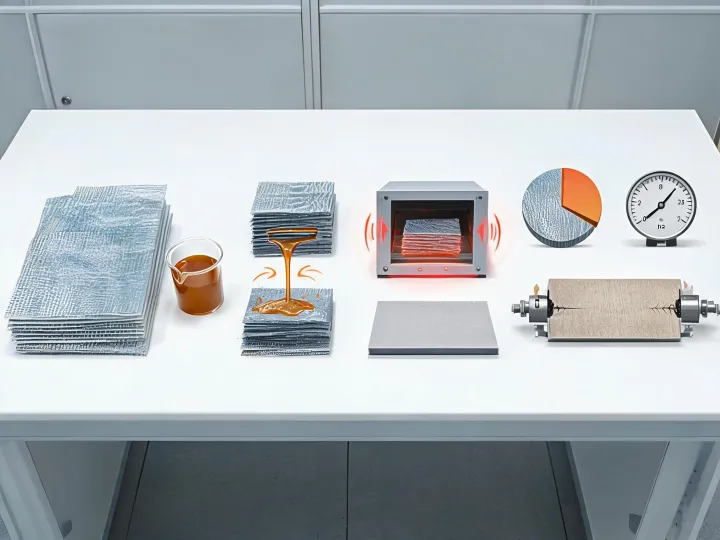
Translate load direction, geometry, thickness, drape and process into fiber, yarn, weave or multiaxial orientation, stitch, areal weight, width and handling criteria.
State sizing, resin family, infusion or impregnation route, wet-out, temperature, cure and storage conditions instead of assuming any glass textile behaves identically.
Use swatches for architecture review, trial rolls for cutting and placement, process panels for wet-out or cure, and production material for lot release.
Name textile and laminate test methods, specimen orientation, conditioning, manufacturing route, repetitions and acceptance criteria before comparing results.
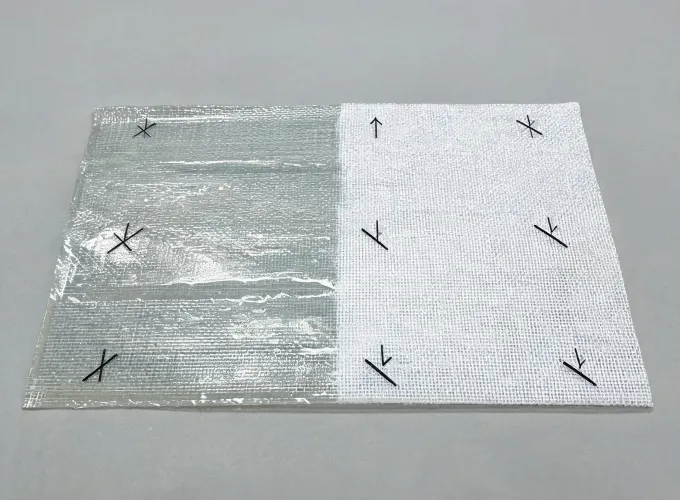
Fiber orientation, stitch thread, permeability, layer stack, flow media, resin viscosity, vacuum and cure interact. A dry textile areal weight cannot predict void content or laminate strength. The trial records architecture, process conditions, cut placement and panel coupon orientation.
Limit: a coupon result represents its laminate manufacturing route and specimen. Geometry, joints, defects, environment and production variability require engineering review.
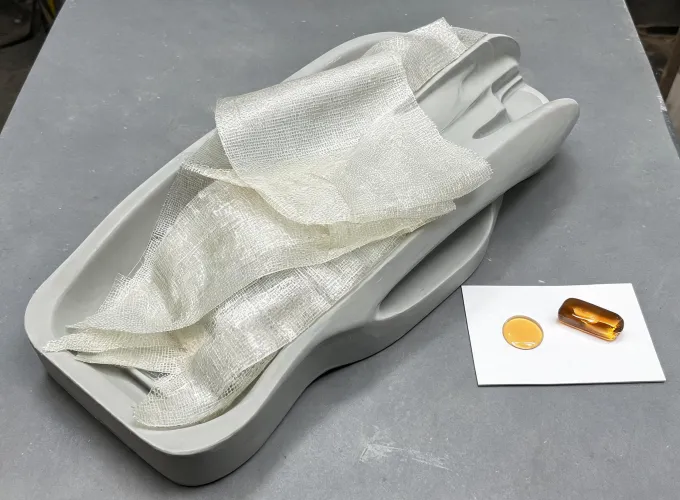
Woven drape, multiaxial stability, UD placement, cuts, overlaps and bridging can compete with theoretical orientation efficiency. A forming trial evaluates distortion, gaps, wrinkles, fiber wash and handling before a production stack is approved.
Limit: an architecture selected for flat-panel data may not remain aligned in a double-curvature tool. Design allowables need the applicable manufactured state.
Inspection records orientation, gaps, wrinkles, bridging, fiber wash, resin-rich zones, void indications and thickness against the accepted process. Defect acceptance belongs to the component and manufacturing plan, not the textile name.
Commercial review aligns width, roll length, packaging, splices, storage, trial quantity, MOQ, testing, date and destination. A textile can be plausible yet unsuitable for the available cutting, layup, infusion or cure window.
Include geometry, load direction, resin, process, test and quantity.